
Services
Areas in which I can help
- Trauma
- Anxiety
- Depression
- Self-Esteem
- Parental Divorce/Separation
- Neurodivergence
- Body Focused Repetitive Behaviors (hair pulling, skin picking)
- Grief and Loss
- Anger Management
- LGBTQ+ and Identity Concerns
- School Related Concerns
- Relationship Issues
Play-Based Therapy

Play is a child’s way of expressing themself, learning, and healing. Therapists that utilize play based therapy assist young clients in addressing cognitive, behavioral, and emotional challenges. As a play based therapist, I am trained to recognize themes in play, promote co-/self-regulation, self-control, and mastery. The two styles of play based therapy include directive and non-directive. My style is a mixture of both, but as a Person-Centered therapist, I focus more on a non directive approach.
You may ask yourself, “Why can’t I just play with my child to help them heal?” The answer is that therapeutic play is very different than regular play. Therapeutic play requires a positive client-therapist relationship, which then allows for the young client to feel comfortable in playing out difficult issues. At times, the therapist may not be aware of what the child is processing and that is not necessary for healing and improvement to occur. Instead, you may find your child’s behavior and/or emotional concerns improve throughout the week.
Sand Play Therapy
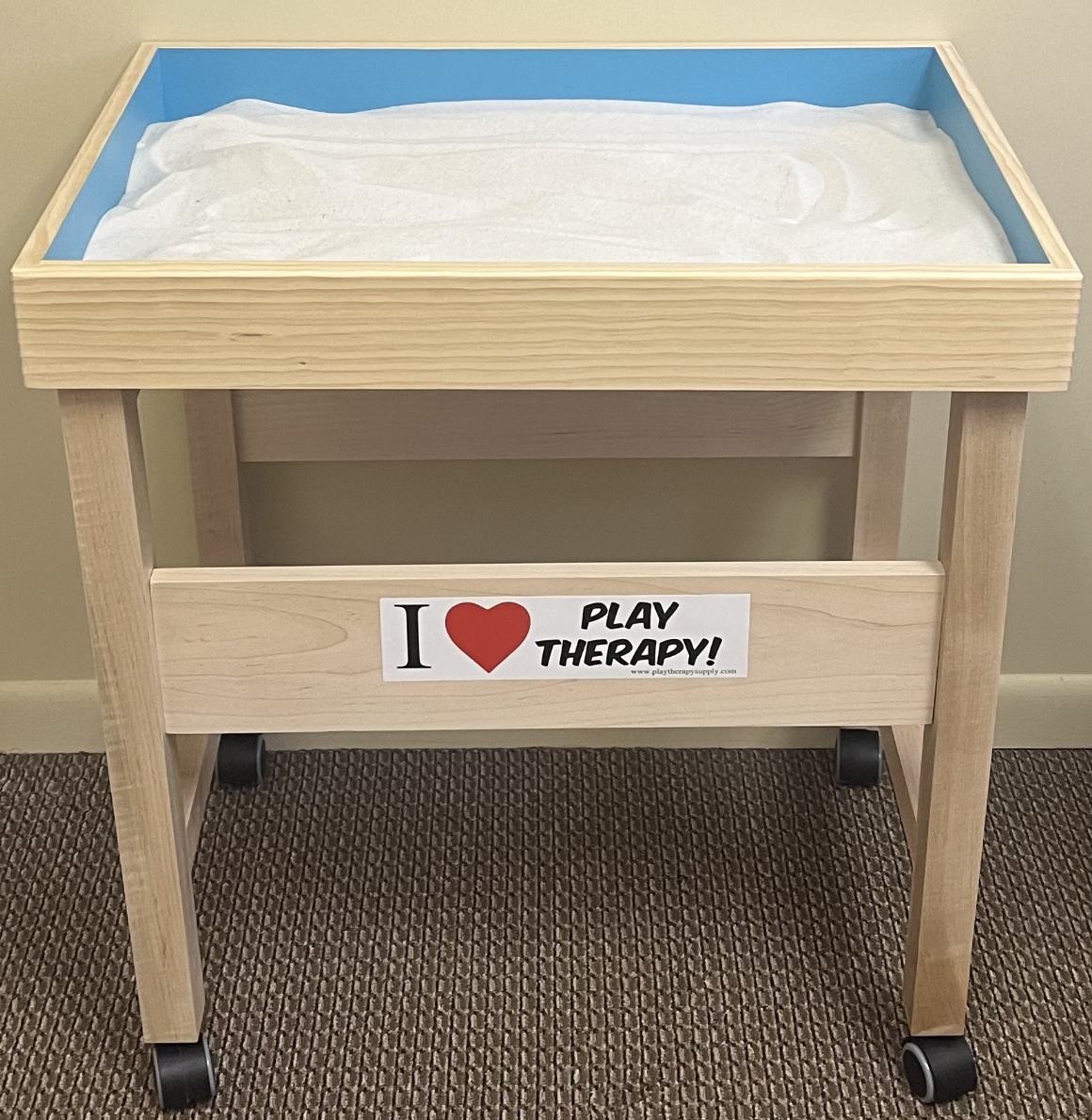
Sand play therapy is a non-verbal mode of therapy that allows clients of all ages to tap into their psyche and work through any trauma and/or wounds they possess. Your child will be able to utilize symbols (small figurines, rocks, stones, etc) within the Sand Tray to work through trauma and/or wounds from pre-verbal and unconscious parts of their brains. Sand Tray therapy was created by Dora Klaff in Switzerland and is based off of Dr. Margaret Lowenfeld’s “World Technique.” Ms. Klaff combined the “World Technique” and Carl Jung’s teachings to create Sand Tray therapy. It was first utilized in the 1950s. Ms. Klaff viewed the Sand Tray as a “free and protected space,” which allowed for deep layers of self-healing.
Sand Tray therapy can be very beneficial as an adjunct to talk therapy for those who have difficulty expressing their thought, feelings, and memories through spoken word. Developmentally, children learn and heal through play. Sand Tray therapy allows for children to work through their trauma and/or wounds through play in the Sand Tray. For adolescents and adults, Sand Tray therapy can be beneficial when spoken words are unable to assist in the healing process.
More information about Sand Tray therapy can be found on www.sandplay.org.
Neurodivergent Affirming Therapy
Children often feel pressure from their parents, guardians, teachers, extended family members, and/or coaches. Neurodivergent children are more likely to have anxiety and depression as a result of the many demands society puts on them. A lot of the time, neurotypical adults don’t fully understand what it means to be autistic, an ADHDer, or have learning difficulties. I work within an neurodiversity affirming framework, including the use of AutPlay (a play therapy framework for working with neurodivergent children), to assist children and adolescents in understanding their own neurodivergence and accepting themselves as they are. This looks like encouraging stimming, not assuming children are lazy, and allowing a child to be who they are during their therapy sessions.
Individual Talk Therapy

Individual talk therapy is beneficial for some older children and adolescents. Talk therapy typically consists of emotion exploration and regulation, psychoeducation, and acquiring and practicing new coping skills. I will assist your child/adolescent in exploring their emotions and learning how to regulate them through the acquisition of coping and relaxation techniques. They will also learn information on relevant topics, including but not limited to, bodily changes, identity issues, family dynamics, school related concerns, relationship issues, and mental health issues.
Parent Support
When working with children and adolescents, parents often want to be involved in their treatment. Typically, I meet with parents/guardians weekly at the beginning/end of the session to receive collateral information for young children. If a parent/guardian needs extra support, clinician will provide parent coaching on a regular basis. Parent coaching will include learning about parenting styles, understanding the connection between child’s and parent/guardian’s behaviors, and gaining effective parenting skills.